25 Feb,2025
The Growing Demand for Diametrically Magnetised Magnets in Advanced Applications
In recent years, the use of diametrically magnetised magnets has been on the rise, with a growing number of industries recognizing their unique advantages in various applications. Unlike traditional magnets that are magnetised along their poles, diametrically magnetised magnets are magnetised across their diameter, creating a stronger and more efficient magnetic field that opens up new possibilities in design and functionality. This innovation has led to significant advancements in fields ranging from medical equipment to renewable energy solutions.
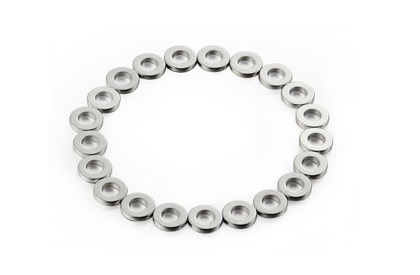
Diametrically Magnetised Magnets: What Are They?
To understand the increasing demand for diametrically magnetised magnets, it is important to first comprehend what sets them apart from other types of magnets. Conventional magnets are magnetised either along their length (axial magnetisation) or radially (across their circumference). However, diametrically magnetised magnets are magnetised across the entire diameter of the magnet, meaning that the north and south poles are located on opposite faces of the magnet, along the edge rather than the traditional pole alignment. This unique magnetisation method results in stronger, more uniform magnetic fields that are better suited for various specialized applications.
Key Advantages of Diametrically Magnetised Magnets
One of the primary reasons behind the increasing interest in diametrically magnetised magnets is their superior performance in several applications. The design of these magnets allows for a larger and more concentrated magnetic field, which makes them ideal for high-performance tasks. For example, they are commonly used in applications that require high torque or precision, such as in motors, sensors, and actuators. In these cases, the diametrically magnetised magnets provide more efficient energy conversion and more consistent performance than traditional magnets.
Another advantage of diametrically magnetised magnets is their ability to maintain a stable magnetic field even under varying temperatures. This makes them particularly useful in industries such as aerospace, where components need to perform reliably in extreme conditions. Their enhanced durability and resilience ensure that they can operate effectively in both high-heat and low-temperature environments, where traditional magnets might lose their magnetic strength.
8-1101, Shenyue Plaza, Jiangbei District, Ningbo, Zhejiang Province, China
Copyright © Ningbo Tronsum Magnetic Industry Co., Ltd. All Right Reserved Powered by www.300.cn SEO Business licensef